1869 · Corner · Bubbles, Black Swans and Crisis Alpha
Black Friday
Jay Gould and Jim Fisk tried to corner the gold market with help from President Grant's brother-in-law. The Treasury broke it in fifteen minutes.
- Date
- Sep 24, 1869
- Gold, morning
- about 160
- Gold, after the Treasury's move
- about 135
- Treasury sale
- $4 m in gold
What happened
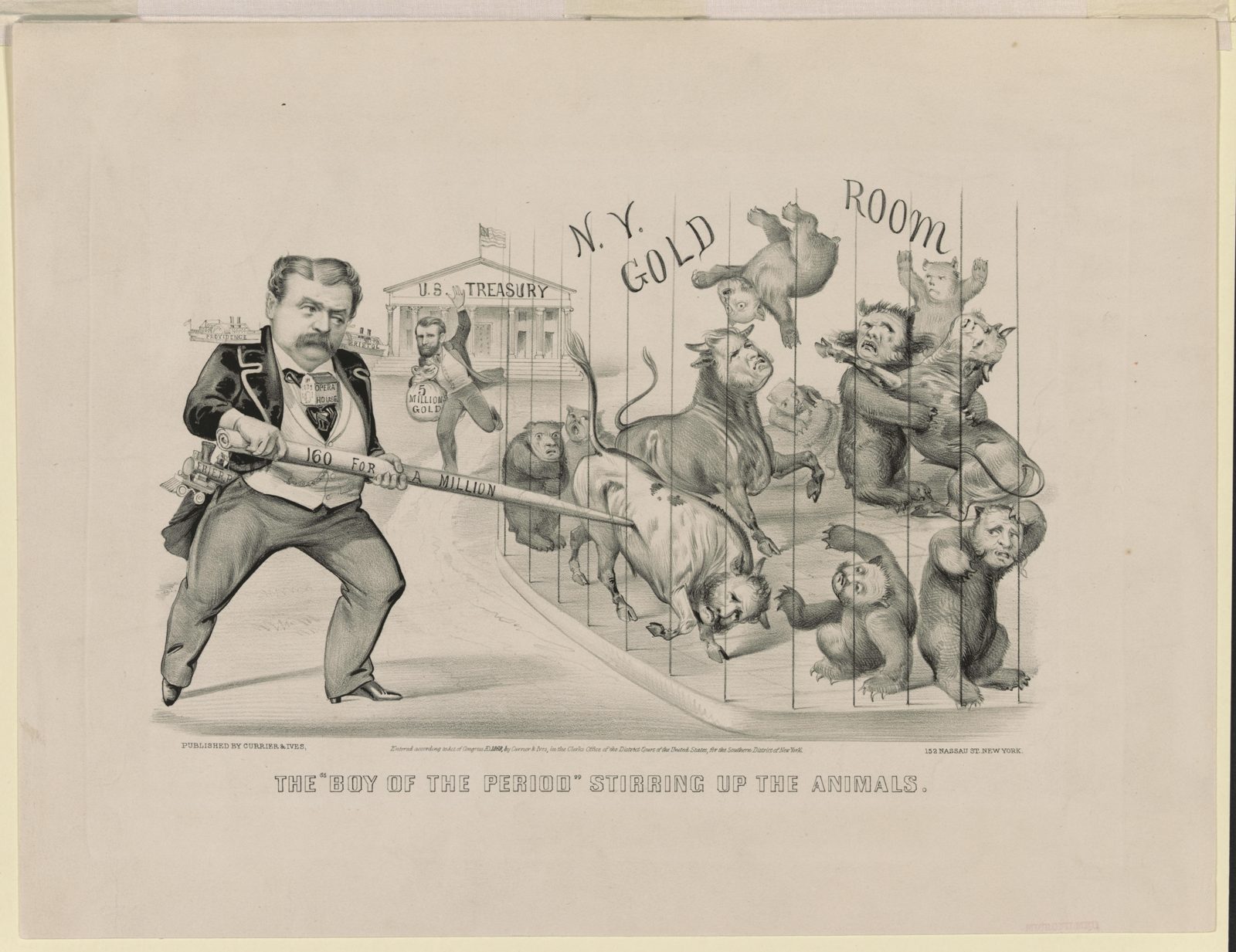
After the Civil War the US paid in paper greenbacks, while gold traded at a premium in the Gold Room on New Street. Jay Gould believed that a higher gold price would help farm exports carried on his Erie Railroad.
Gould and Jim Fisk bought gold and gold contracts. They recruited Abel Corbin, President Grant's brother-in-law, to persuade Grant not to sell Treasury gold, and the assistant treasurer in New York, Daniel Butterfield, was given a share of the profits.
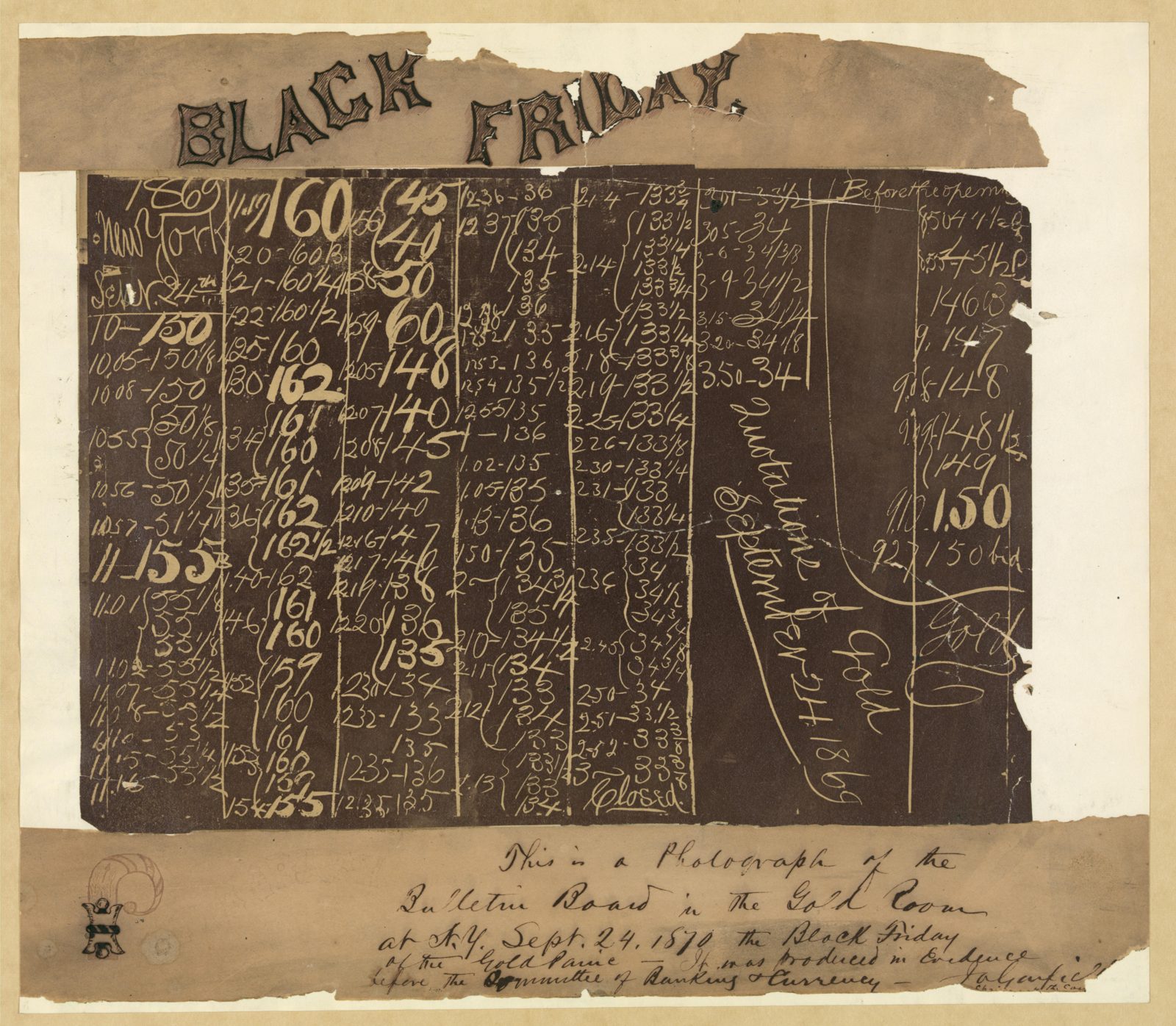
By late September they held far more gold than was available in New York. On Friday, September 24 the price rose toward 160. Grant ordered the Treasury to sell $4 million of gold. Within fifteen minutes the price fell to about 135. Brokers failed, and Gould, who had learned of the sale in advance, sold in time; Fisk repudiated many of his contracts.
In their own words
“Business was conducted with so much confusion that bids running from 135 to 160 were made at one and the same time in different parts of the room.”
Henry Clews, Fifty Years in Wall Street (1908)
People
Ideas
The record
William Worthington Fowler
James K. Medbery
Henry Clews
- Also in The Pit & the Pendulum: A Menagerie of Speculative Follies (David Harding and James Holmes); Trend Following (Michael Covel)