1920 · Fraud · Bubbles, Black Swans and Crisis Alpha
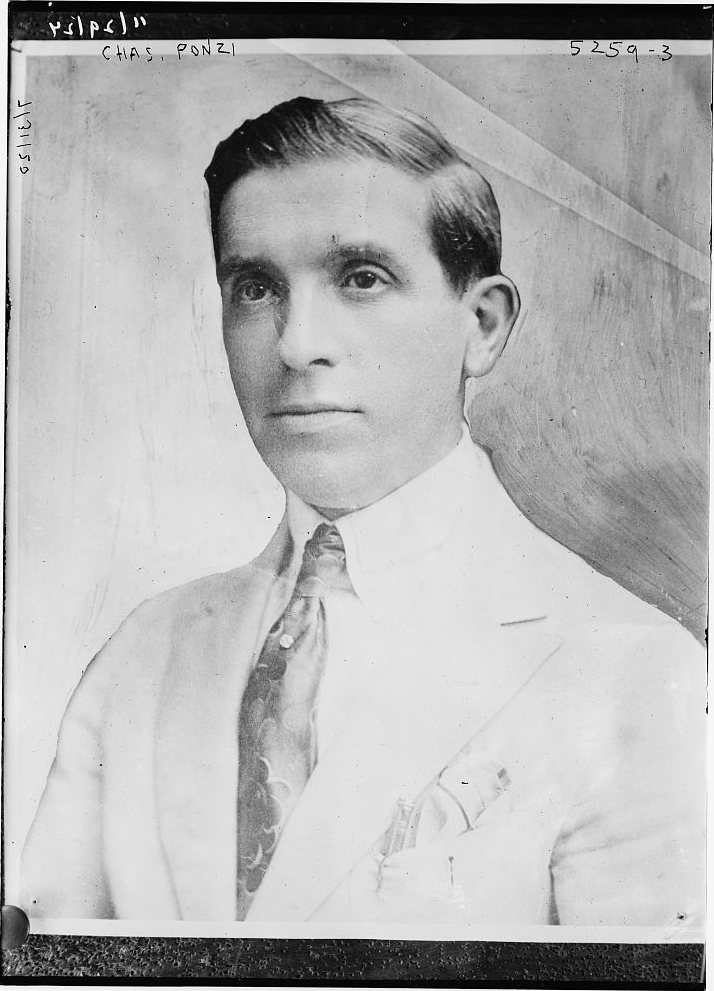
Charles Ponzi
A Boston clerk promised investors 50% in 45 days from trading postal coupons. He was paying them with their neighbors' money.
- Promise
- 50% in 45 days
- Investors
- about 40,000
- Collapse
- Aug 1920
- Taken in
- about $15 m
What happened
Charles Ponzi, an Italian immigrant, noticed that international reply coupons, which could be swapped for postage stamps, cost less in some countries than the stamps they could buy in others. In December 1919 he started the Securities Exchange Company in Boston and promised investors 50% in 45 days.
Early investors were paid on time, and word spread. By mid-1920 he had taken in about $15 million from tens of thousands of people. Almost none of it went into coupons; he paid old investors with new money.
The Boston Post began to investigate. The financial editor Clarence Barron pointed out that Ponzi's scheme would have needed about 160 million coupons when about 27,000 were in circulation. In August 1920 auditors found Ponzi millions of dollars short. On August 11 the state seized Hanover Trust, a bank where he had bought shares and drawn his checks. He pleaded guilty to mail fraud and was deported to Italy in 1934. The name stayed.
People
Ideas
The record
- Books The Harriman House Book of Investing Rules; The Black Swan (2nd ed.) (Nassim Taleb); Bubbles, Crashes and Financial Disasters (Ralph Lyons); Gold Bricks of Speculation: A Study of Speculation and Its Counterfeits (John Hill Jr.)