1619–1623 · Currency debasement · Bubbles, Black Swans and Crisis Alpha
Kipper und Wipper
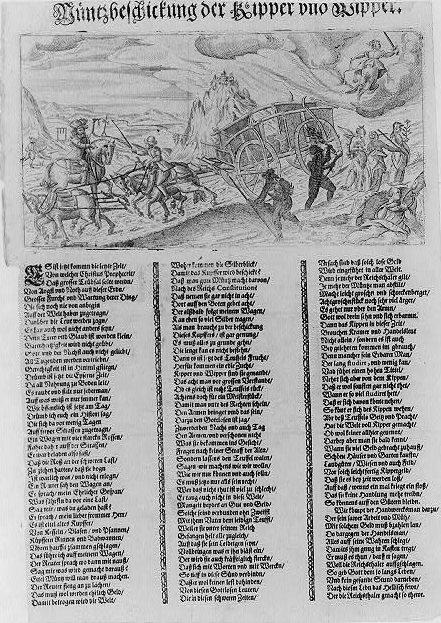
At the start of the Thirty Years' War, German princes and mints debased their coins to pay for armies. Prices soared, and the episode got a name: the clippers and the weighers.
- Began
- 1619
- Peak
- 1621–1622
- Ended
- 1623
- Name
- Kipper (clippers), Wipper (weighers)
What happened
The Thirty Years' War began in 1618. Princes and cities across the Holy Roman Empire needed money for troops and ordered their mints to put less silver in each coin.
Mint operators bought up good coins, melted them and reissued them with copper added. They spent the debased coins in neighboring territories, which then debased their own. The name Kipper und Wipper is said to come from the clipping of coins and the tipping of scales.
Prices of bread and other goods rose many times over in two or three years, and those paid fixed wages or rents suffered most. Between 1622 and 1623 most of the authorities returned to sound coins, and the old ones were called in at a loss.
The record
Michael Covel
- Also in Manias, Panics, and Crashes: A History of Financial Crises (Robert Z. Aliber, Charles P. Kindleberger and Robert N. McCauley)