1792 · Panic · Bubbles, Black Swans and Crisis Alpha
Panic of 1792
A former Treasury official's leveraged bets on government debt and bank shares failed. Alexander Hamilton had the Treasury buy securities to stop the panic.
- Duer stopped payment
- Mar 9, 1792
- Treasury purchases
- Mar–Apr 1792
- Buttonwood Agreement
- May 17, 1792
- Duer
- debtors' prison
What happened
William Duer had served as assistant secretary of the Treasury under Alexander Hamilton. In 1791 and 1792 he borrowed from merchants, tradesmen and widows to buy shares of the new Bank of the United States and government bonds, trying to corner them.
Prices fell, and on March 9, 1792 Duer stopped paying his debts. Many small lenders lost their savings, and he was jailed for debt.
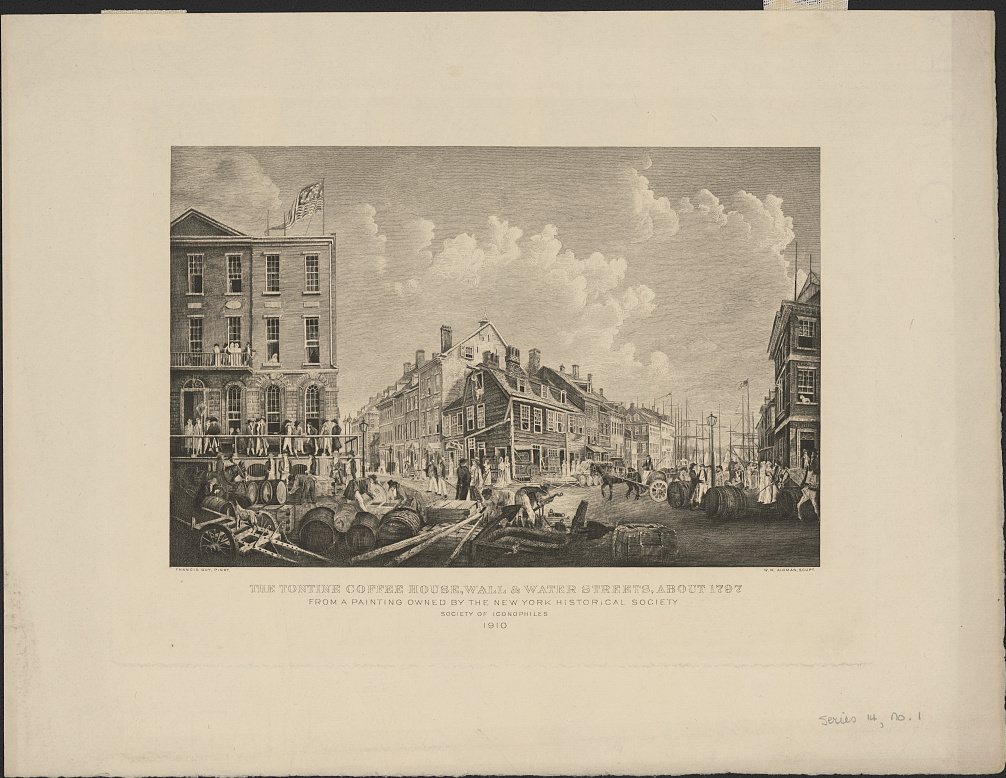
Hamilton had the Treasury buy government bonds in the market and encouraged banks to keep lending, an early example of a central authority acting to stop a panic. On May 17 two dozen brokers signed the Buttonwood Agreement, the start of the New York Stock Exchange.
People
The record
David Harding and James Holmes