1873 · Panic · Bubbles, Black Swans and Crisis Alpha
Panic of 1873
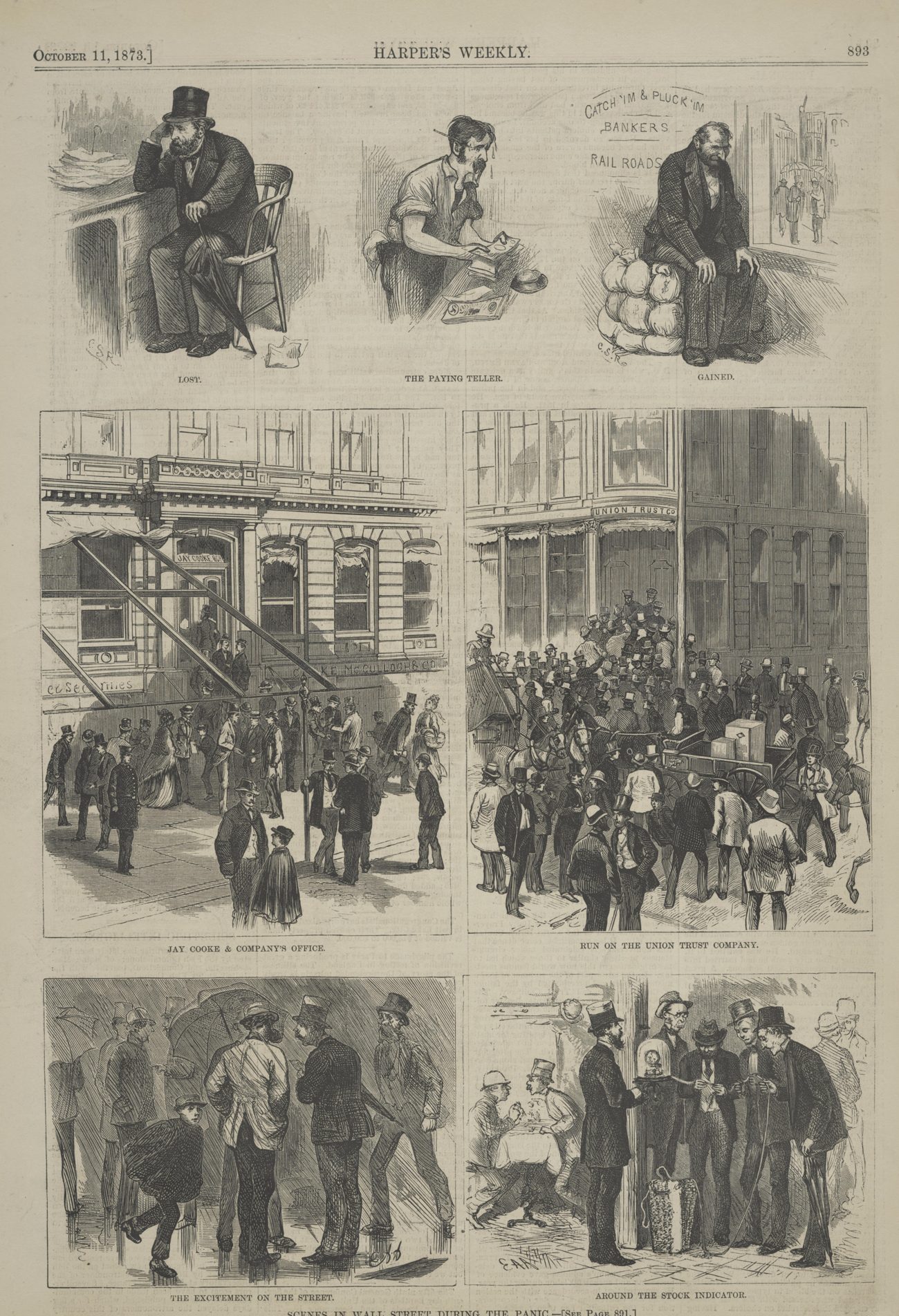
The failure of Jay Cooke's bank, which was financing the Northern Pacific, closed the New York Stock Exchange for ten days and began a depression that lasted six years.
- Jay Cooke & Co. failed
- Sep 18, 1873
- Exchange closed
- Sep 20–30
- Clearing House certificates
- $26.6 m
- Depression
- 1873–1879
What happened
Jay Cooke had sold the Union's bonds in the Civil War. In the 1870s his bank financed the Northern Pacific Railroad, but its bonds stopped selling after a crash in Vienna in May 1873 dried up European money.
On September 18, 1873 Jay Cooke & Co. failed. Fisk & Hatch failed the next day, then dozens of brokers, among them Henry Clews's own firm. On September 20 the New York Stock Exchange closed for the first time. It reopened on September 30.
Banks issued $26.6 million of Clearing House certificates to one another to keep paying. The economy fell into a long depression; about a quarter of US railroads went bankrupt, and prices fell for six years.
People
Ideas
The record
Henry Clews
- Also in The Rationale of Market Fluctuations (3rd ed.) (Arthur Ellis); The Pit & the Pendulum: A Menagerie of Speculative Follies (David Harding and James Holmes); Trend Following (Michael Covel); The Gilded Age: A Tale of To-Day (Mark Twain and Charles Dudley Warner); Manias, Panics, and Crashes: A History of Financial Crises (Robert Z. Aliber, Charles P. Kindleberger and Robert N. McCauley)