1884 · Panic, fraud · Bubbles, Black Swans and Crisis Alpha
Panic of 1884
A brokerage in which former President Grant was a partner turned out to be a fraud. Its failure brought down a bank and set off a panic.
- Marine Bank failed
- May 6, 1884
- Grant & Ward suspended
- May 8, 1884
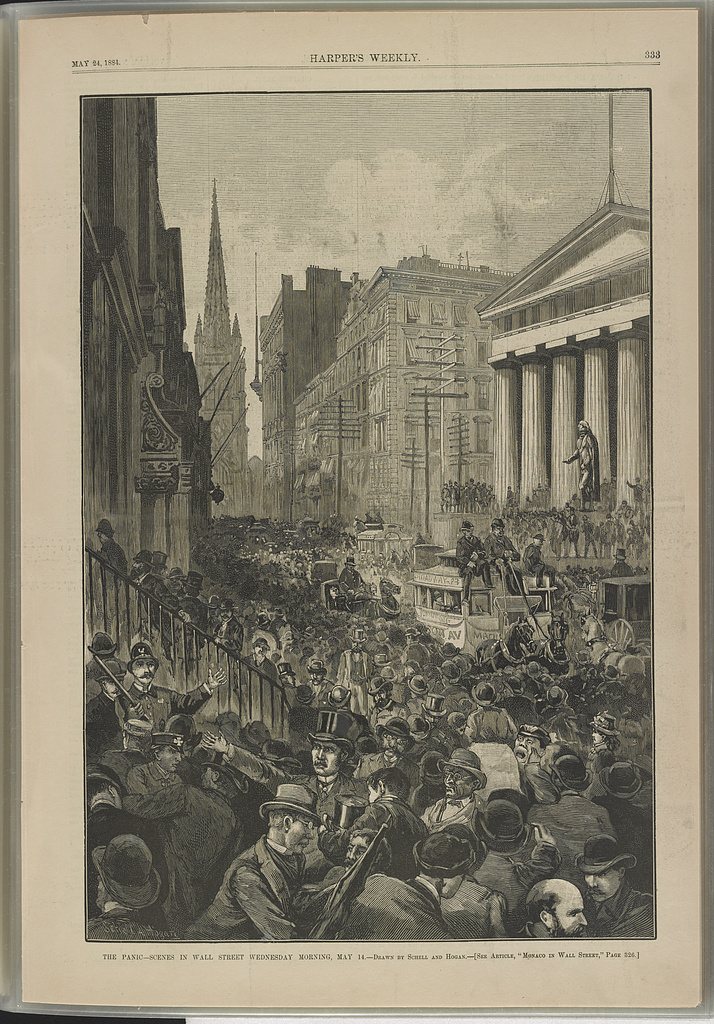
- Height of the panic
- May 14, 1884
- Clearing House certificates
- $24.9 m
What happened
Ferdinand Ward, a young broker, had taken Ulysses S. Grant's son as a partner, and the former president invested his savings. Ward told investors the firm made large profits on government contracts. He borrowed against the same securities several times and paid old investors with new money.
On May 6, 1884 the Marine National Bank, whose president James Fish was Ward's partner, failed. Grant & Ward suspended within two days. On May 14 it came out that John C. Eno, president of the Second National Bank, had taken several million dollars of its money. The Metropolitan Bank closed, and the panic peaked.
New York banks issued $24.9 million of Clearing House loan certificates to one another to stop the runs. Grant lost everything and wrote his memoirs, finished days before his death in 1885, to provide for his family. Ward went to prison.
In their own words
“The storm had been brewing for nearly three years, but it was in no sense a commercial panic.”
Henry Clews, Fifty Years in Wall Street (1908)
People
Ideas
The record
Henry Clews
- Also in The Pit & the Pendulum: A Menagerie of Speculative Follies (David Harding and James Holmes); Plain Truths about Stock Speculation: How to Avoid Losses in Wall Street (E. V. Smith)