1877 · Depression · Bubbles, Black Swans and Crisis Alpha
The Great Railroad Strike of 1877
In the fourth year of a depression, railroads cut wages again. Workers struck from Baltimore to St. Louis, and federal troops were sent in.
- Began
- Jul 16, 1877
- Workers involved
- over 100,000
- Property losses
- about $10 m (Clews)
- Deaths
- about 100
What happened
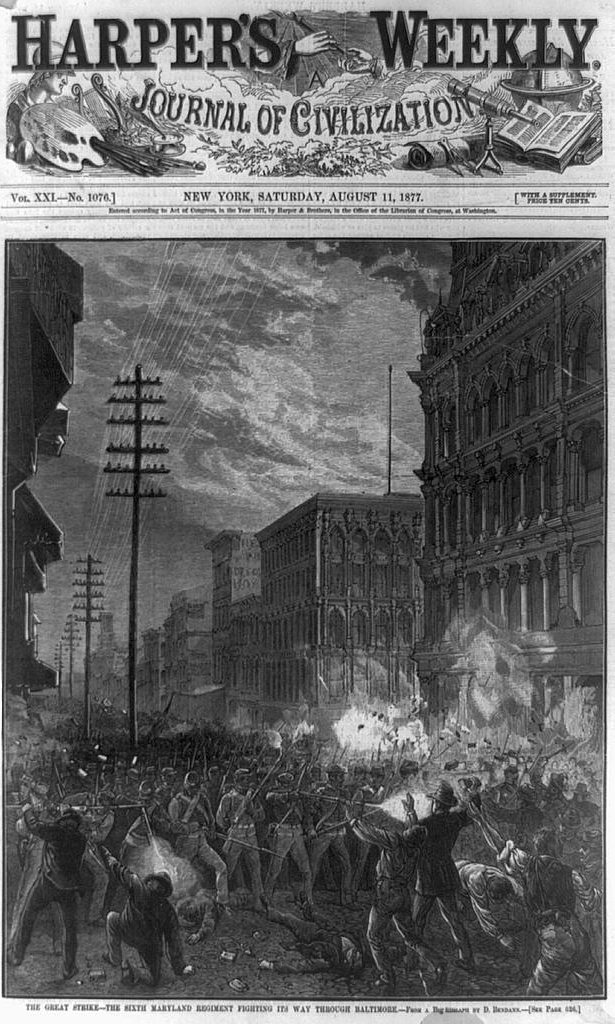
Four years after the panic of 1873 the US economy was still depressed. In July 1877 the Baltimore & Ohio Railroad cut wages for the second time in a year. On July 16 workers in Martinsburg, West Virginia, stopped the trains.
The strike spread along the railroads to Baltimore, Pittsburgh, Chicago and St. Louis. In Pittsburgh crowds burned the Pennsylvania Railroad's yards. Governors called out militias and President Hayes sent federal troops.
The strike was broken within weeks. About 100 people were killed. Clews put the losses at about $10 million and the number of workers involved at more than 100,000.
People
The record
- Reading A History of Share Prices (chart and chronology) (Kieron Nutbrown)