1634–1637 · Mania · Bubbles, Black Swans and Crisis Alpha
Tulipomania
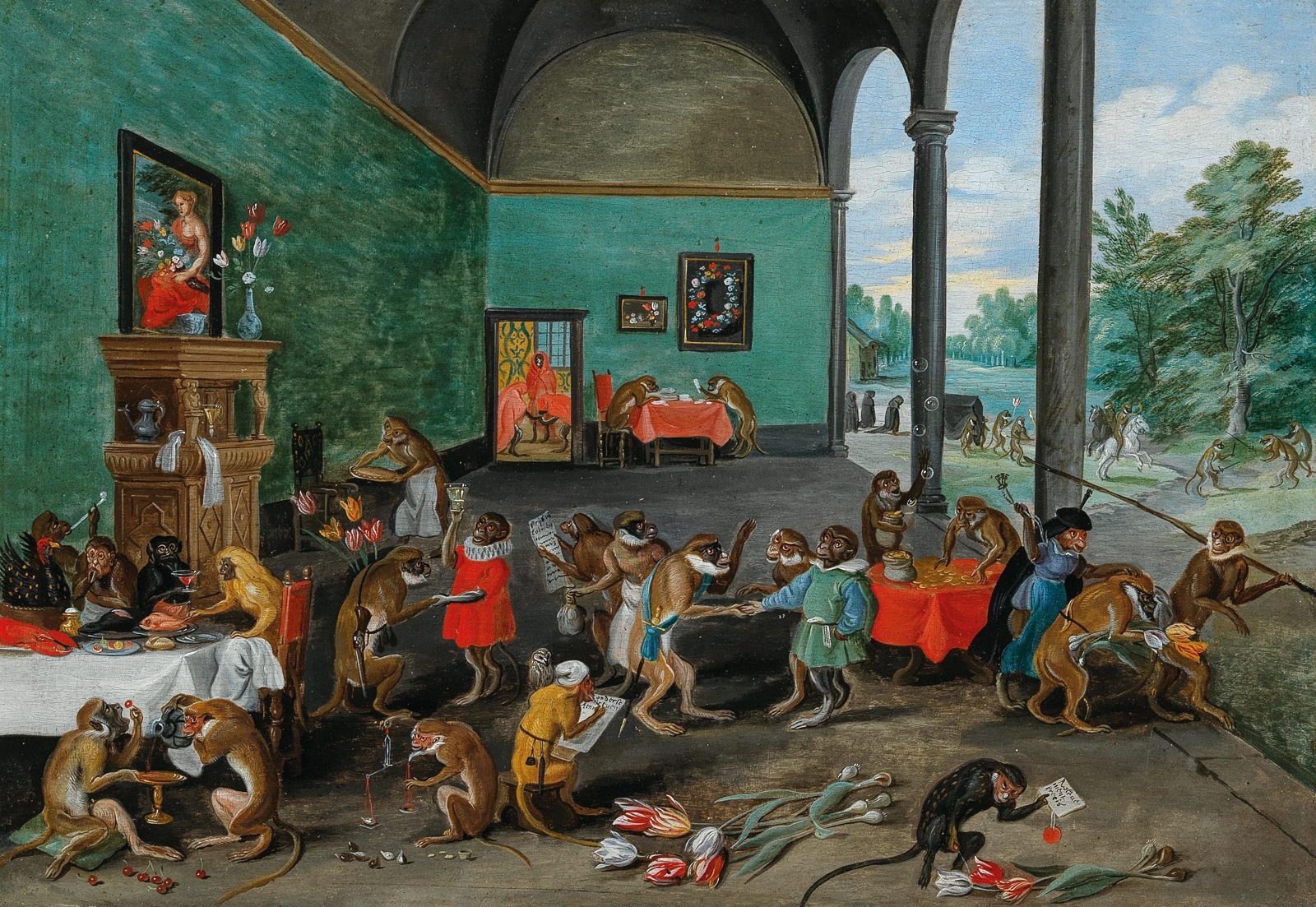
In the Dutch Republic of the 1630s, single tulip bulbs sold for the price of a house. The market broke in February 1637.
- Boom
- 1634–1637
- Peak
- early Feb 1637
- Viceroy bulb, per Mackay
- 2,500 florins in goods
- Break
- Feb 1637
What happened
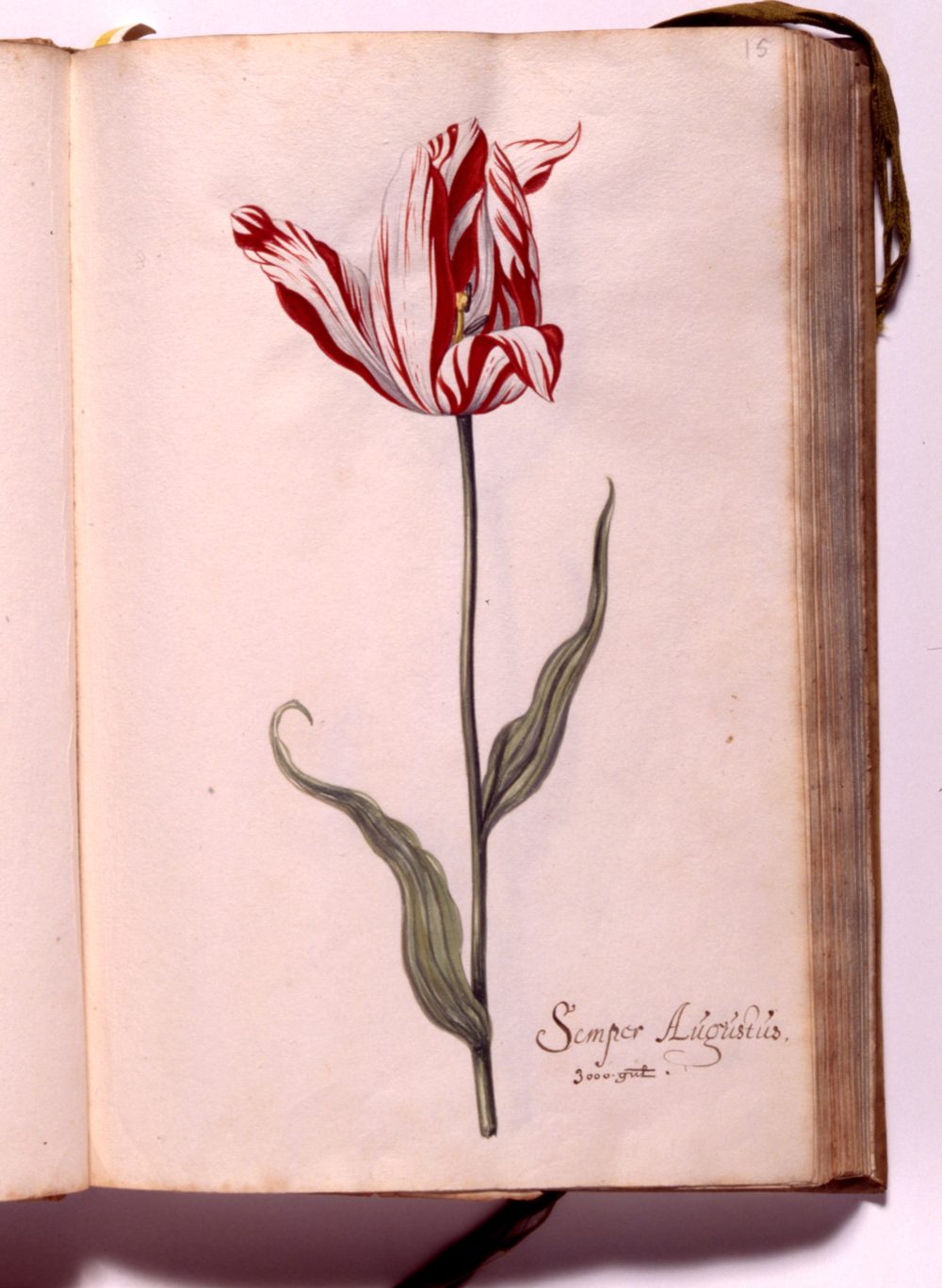
Tulips came to the Netherlands from the Ottoman Empire in the late 1500s. Bulbs with streaked, flamed petals, caused by a virus no one understood, were the most prized, and could not be bred to order.
In the mid-1630s trading spread from collectors to weavers, bakers and innkeepers. Buyers traded bulbs still in the ground, for delivery after flowering, in tavern auctions. Prices for rare bulbs rose many times over in the winter of 1636–37.
In early February 1637 buyers stopped appearing at an auction in Haarlem, and prices collapsed within days. Courts declined to enforce many of the contracts, and towns settled them for a fraction of their value.
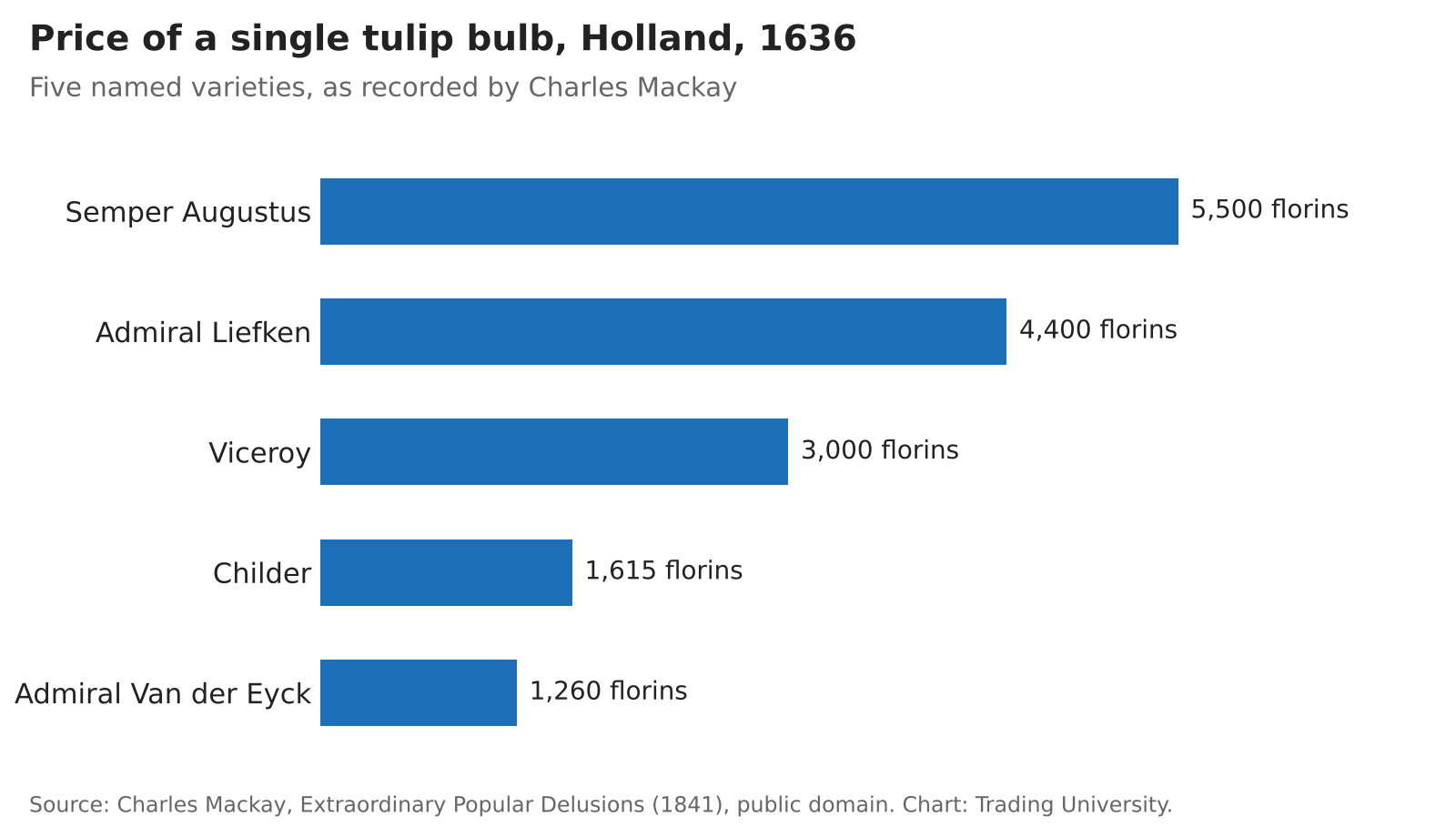
Charles Mackay's 1841 account made tulipomania the classic mania. Modern historians, among them Anne Goldgar, have found that the damage to the Dutch economy was smaller than Mackay said. The price list he printed for a single Viceroy bulb is still the best-known image of a bubble.
In their own words
“Two lasts of wheat, four lasts of rye, four fat oxen, eight fat swine, twelve fat sheep, two hogsheads of wine, four tuns of beer, two tuns of butter, one thousand lbs. of cheese, a complete bed, a suit of clothes, a silver drinking-cup.”
Adapted from a table in Charles Mackay, Extraordinary Popular Delusions and the Madness of Crowds (1841), of the goods given for one Viceroy bulb
Ideas
The record
Charles Mackay
David Harding and James Holmes
Peter Bernstein
- Also in The Black Swan (2nd ed.) (Nassim Taleb); The Harriman House Book of Investing Rules; Trend Following (Michael Covel); Irrational Exuberance (3rd ed.) (Robert Shiller); Bubbles and Crashes: The Boom and Bust of Technological Innovation (Brent Goldfarb and David A. Kirsch); Bubbles, Crashes and Financial Disasters (Ralph Lyons); Bubbleology: The New Science of Stock Market Winners and Losers (Kevin Hassett); Early Speculative Bubbles and Increases in the Supply of Money (2nd ed.) (Douglas E. French); Booms and Busts: An Encyclopedia of Economic History from Tulipmania of the 1630s to the Global Financial Crisis of the 21st Century (James Ciment (editor)); Chronicles and Characters of the Stock Exchange (John Francis); Manias, Panics, and Crashes: A History of Financial Crises (Robert Z. Aliber, Charles P. Kindleberger and Robert N. McCauley)