1987 · Crash · Bubbles, Black Swans and Crisis Alpha
Black Monday
The Dow fell 22.6% in one day, still its largest one-day percentage drop. Trend followers had one of their best years.
- Date
- Oct 19, 1987
- Dow that day
- −22.6%
- S&P 500, Aug 25 peak to Dec 4 low
- −33.5%
- S&P back to Aug 1987 high
- Jul 26, 1989
What happened
US stocks rose about 40% in the first eight months of 1987. Many pension funds had bought portfolio insurance, a strategy that sold stock index futures by formula as prices fell.
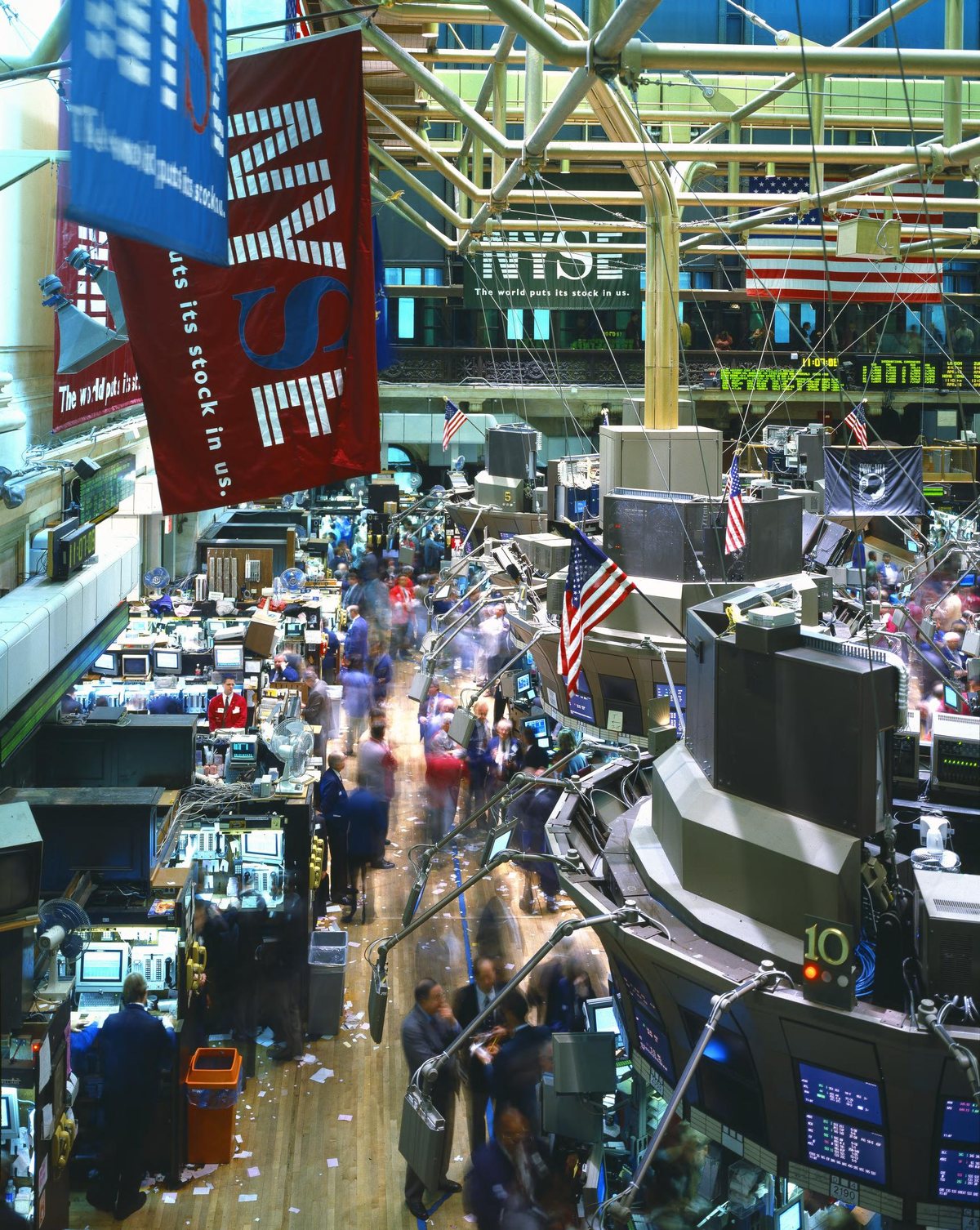
In the week before October 19 the market fell more than 10%. On Monday the selling came from every direction, and portfolio insurers sold futures into a market with no buyers. The Dow fell 508 points, 22.6%. The S&P 500 lost about a third from its August 25 peak and did not regain that closing high until July 26, 1989.
Before the market opened on October 20, the new Federal Reserve chairman, Alan Greenspan, said the Fed would supply liquidity to the financial system. Stocks steadied.
Trend followers had been riding falling bonds and a falling dollar for months; when stocks broke, many were short them as well. John W. Henry's Financials and Metals program gained 251% in 1987.
Who lost, who won
Lost
| S&P 500Oct–Nov 1987 | −28% |
Won
| John W. Henry, Financials and MetalsOct–Nov 1987 | +69.7% |
| John W. Henry, Original ProgramOct–Nov 1987 | +58.2% |
| John W. Henry, Financials and Metals1987 | +251.0% |
| JPD1987 | +96.8% |
| Rabar1987 | +78.2% |
| Dunn Capital, WMA1987 | +72.2% |
| Campbell & Company1987 | +64.4% |
| Chesapeake Capital1987 | +38.8% |
From Michael Covel, Trend Following, Tables 4.10 and 4.11.
Performance figures are as published by the firms named, whose records are on file with the CFTC. Past performance is not necessarily indicative of future results. Trading University is not an agent for any firm named and makes no offer to invest.
In their own words
“The Federal Reserve, consistent with its responsibilities as the Nation's central bank, affirmed today its readiness to serve as a source of liquidity to support the economic and financial system.”
Federal Reserve statement, October 20, 1987
People
- Alan Greenspan · Federal Reserve
- John W. Henry
- Paul Tudor Jones · Tudor Investment
- Bill Dunn · Dunn Capital
- Jerry Parker · Chesapeake Capital
- Keith Campbell · Campbell & Company
Ideas
- Black Swan
- Fat tails
- Random walk vs. trends
- Narrative fallacy
- Cut losses, let winners run
- Simple rules beat complex models
- Antifragility
- Self-organized criticality
The record
Michael Covel
- Also in The Black Swan (2nd ed.) (Nassim Taleb); Against the Gods (Peter Bernstein); The (Mis)Behavior of Markets (Benoit Mandelbrot & Richard Hudson); When Genius Failed (Roger Lowenstein); The Pit & the Pendulum: A Menagerie of Speculative Follies (David Harding and James Holmes); The Harriman House Book of Investing Rules; The Language of Money (Annabelle Mooney); The Big Short (Michael Lewis); The New Market Wizards (Jack Schwager); Hedge Fund Market Wizards (Jack Schwager); Market Wizards (Jack Schwager); The Alchemy of Finance (George Soros); A Man for All Markets (Edward Thorp); The Man Who Solved the Market (Gregory Zuckerman); Adaptive Markets (Andrew Lo); Efficiently Inefficient (Lasse Heje Pedersen); Fortune’s Formula (William Poundstone); Quantitative Momentum (Wesley Gray & Jack Vogel); More Money Than God (Sebastian Mallaby); Fooled by Randomness (Nassim Taleb); Irrational Exuberance (3rd ed.) (Robert Shiller); Misbehaving (Richard Thaler); Unknown Market Wizards (updated edition) (Jack Schwager); “A Century of Evidence on Trend-Following Investing” (Brian Hurst, Yao Hua Ooi and Lasse Pedersen (AQR)); Why Stock Markets Crash (Didier Sornette); Triumph of the Optimists (Elroy Dimson, Paul Marsh and Mike Staunton); Stabilizing an Unstable Economy (Hyman Minsky); Bubbles, Crashes and Financial Disasters (Ralph Lyons); The Invisible Hands: Top Hedge Fund Traders on Bubbles, Crashes, and Real Money (rev. ed.) (Steven Drobny); Bubbleology: The New Science of Stock Market Winners and Losers (Kevin Hassett); Bubbles and Crashes: The Boom and Bust of Technological Innovation (Brent Goldfarb and David A. Kirsch); Early Speculative Bubbles and Increases in the Supply of Money (2nd ed.) (Douglas E. French); “The Self-Organized Criticality Paradigm in Economics & Finance” (Jean-Philippe Bouchaud); Booms and Busts: An Encyclopedia of Economic History from Tulipmania of the 1630s to the Global Financial Crisis of the 21st Century (James Ciment (editor)); Largest Quarterly S&P Losses Since 1980 (Sunrise Capital Partners); S&P 500 Corrections & Bear Markets Since 1928 (Yardeni Research); Manias, Panics, and Crashes: A History of Financial Crises (Robert Z. Aliber, Charles P. Kindleberger and Robert N. McCauley)
- Official Federal Reserve History: Stock Market Crash of 1987