1860–1861 · Panic · Bubbles, Black Swans and Crisis Alpha
The secession crisis
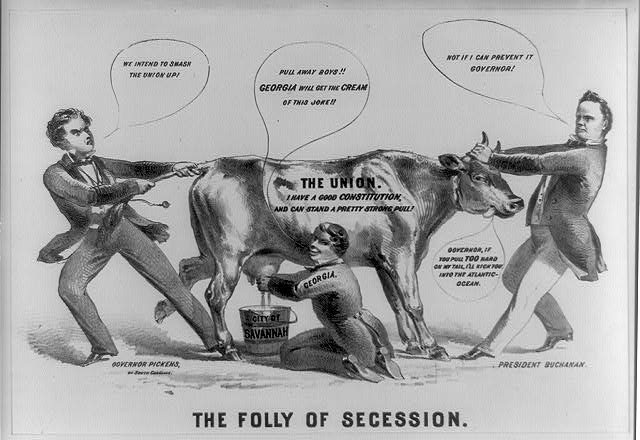
Lincoln's election and the secession of the South froze Southern debts to the North. New York's banks pooled their reserves to keep paying.
- Lincoln elected
- Nov 6, 1860
- Southern banks suspended
- Dec 12, 1860
- South Carolina seceded
- Dec 20, 1860
- US bonds low
- 75, Apr 1861
What happened
After Abraham Lincoln was elected in November 1860, Southern states moved to leave the Union. Merchants in the North were owed large sums by Southern customers and could not expect to be paid. Stocks fell and money tightened.
The New York Clearing House let its member banks pool their reserves and settle with one another in loan certificates, so that no single bank would be forced to stop. Southern banks suspended gold payments on December 12, and South Carolina seceded on December 20.
Clews wrote that the war crisis was so slow and prolonged that it was never called a panic. US government bonds fell as low as 75 in April 1861, the month the war began.
People
The record
Henry Clews