1720 · Mania · Bubbles, Black Swans and Crisis Alpha
The South Sea Bubble
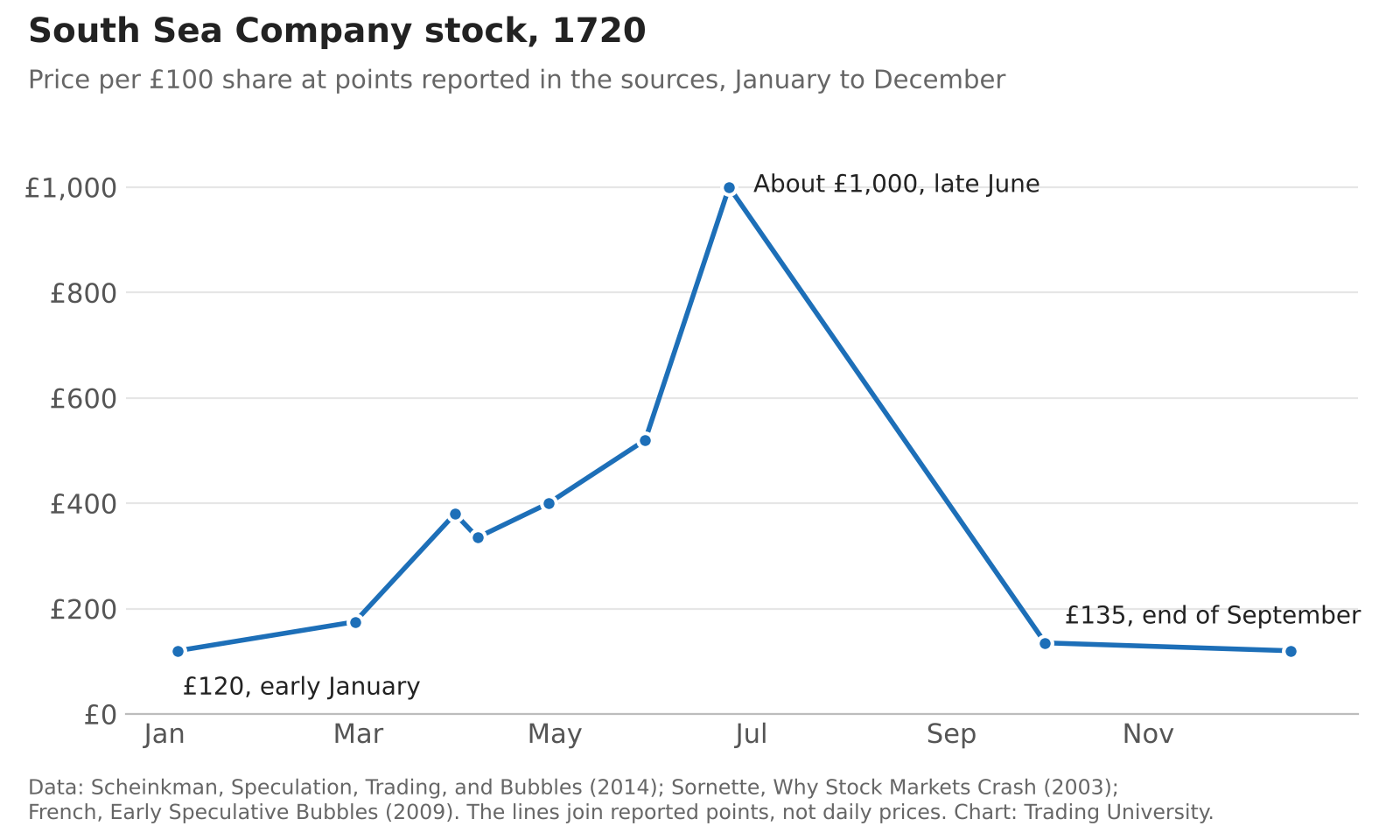
The South Sea Company offered to take over Britain's national debt in exchange for its own shares. The shares rose eightfold in six months, and fell back by autumn.
- Shares, Jan 1720
- about £128
- Peak
- about £1,000, Jun 1720
- Shares, Dec 1720
- about £125
- Bubble Act
- Jun 1720
What happened
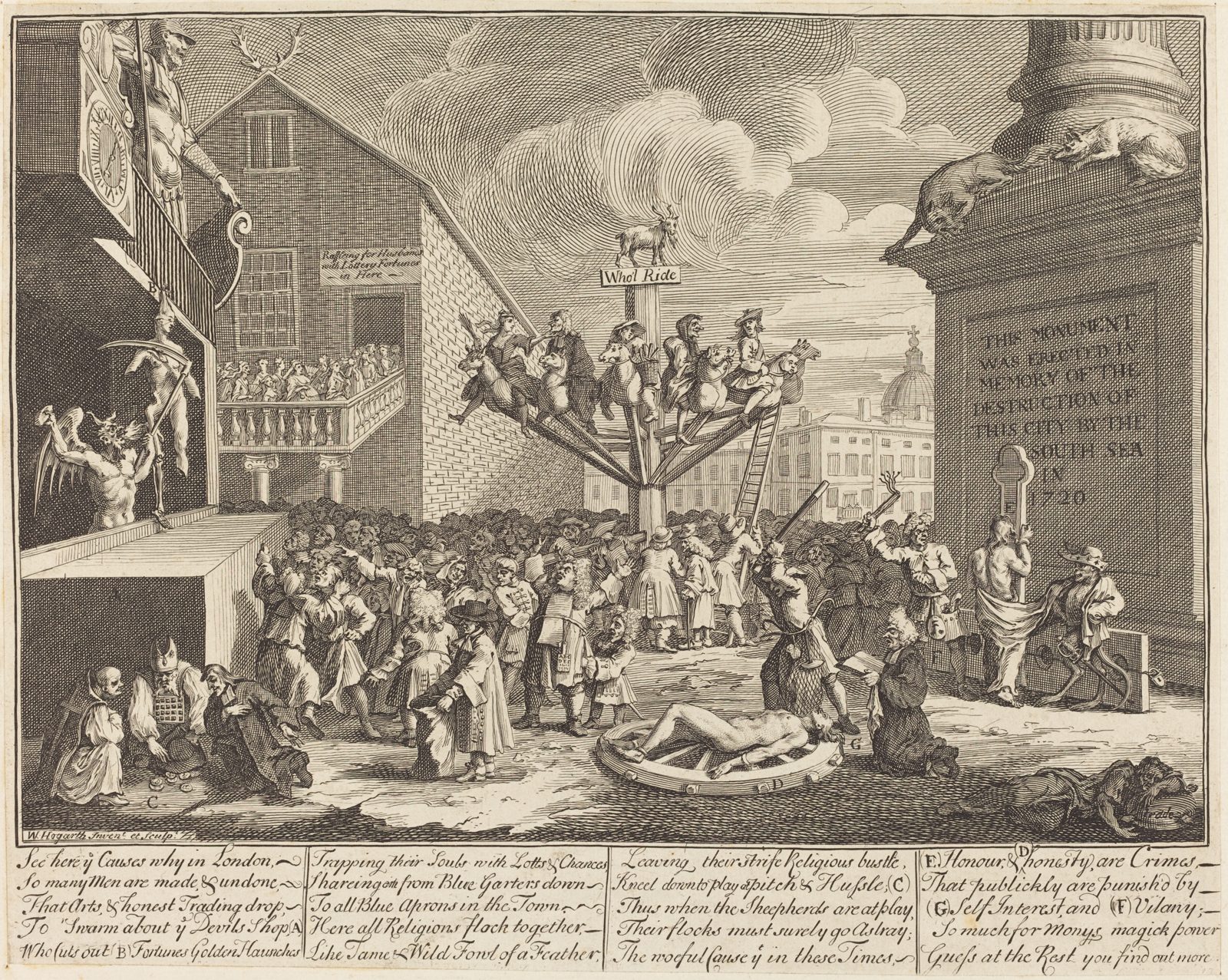
The South Sea Company held a monopoly on British trade with Spanish America, which earned little. In 1720 its directors, led by John Blunt, offered to convert most of the national debt into company shares. Parliament agreed, and directors bribed ministers and members to win the vote.
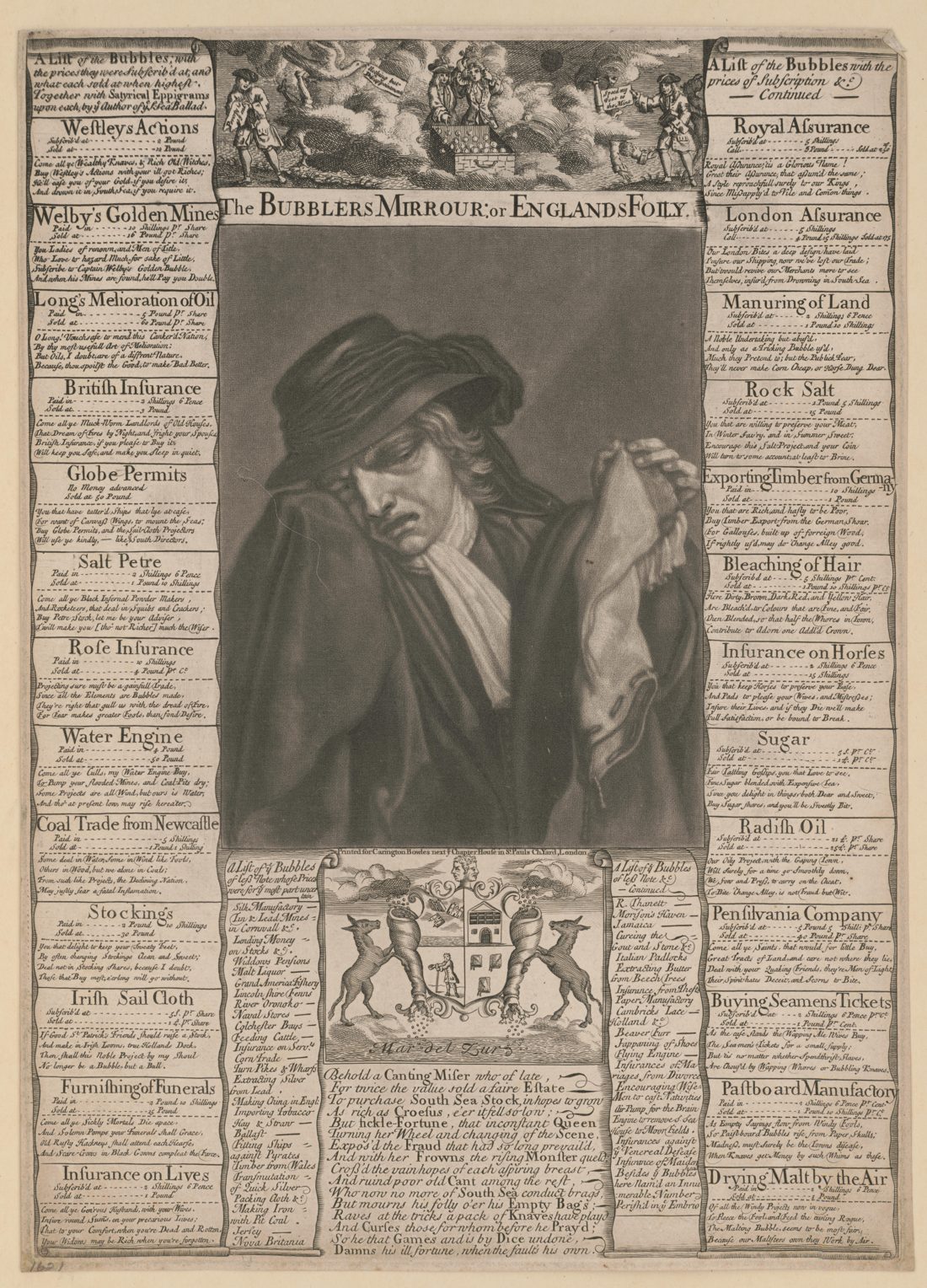
The higher the share price, the fewer shares the company had to give debt-holders, so it pushed the price up: it lent investors money to buy, sold new shares in installments and paid out generous promises. Shares rose from about £128 in January to about £1,000 in June. Hundreds of other companies were floated, one, now famous, for carrying on an undertaking of great advantage, but nobody to know what it is.
In June Parliament passed the Bubble Act to stop rival companies. By September the price was falling, and by December it was back near where it began. Landowners, clergy and merchants were ruined. Isaac Newton is said to have lost £20,000. A parliamentary inquiry found the bribes, the treasurer Robert Knight fled the country, and directors' estates were seized.
In their own words
“A company for carrying on an undertaking of great advantage, but nobody to know what it is.”
Charles Mackay, Extraordinary Popular Delusions and the Madness of Crowds (1841)
People
Ideas
The record
Charles Mackay
David Harding and James Holmes
- Also in Trend Following (Michael Covel); The Price of Time (Edward Chancellor); Bubbles, Crashes and Financial Disasters (Ralph Lyons); Speculation, Trading, and Bubbles (José A. Scheinkman, with Kenneth Arrow, Patrick Bolton, Sanford Grossman and Joseph Stiglitz); Early Speculative Bubbles and Increases in the Supply of Money (2nd ed.) (Douglas E. French); “Learning to Love Investment Bubbles: What if Sir Isaac Newton Had Been a Trendfollower?” (Mebane Faber); Booms and Busts: An Encyclopedia of Economic History from Tulipmania of the 1630s to the Global Financial Crisis of the 21st Century (James Ciment (editor)); Boom, Bust, and Beyond: New Perspectives on the 1720 Stock Market Bubble (Stefano Condorelli and Daniel Menning (editors)); Chronicles and Characters of the Stock Exchange (John Francis); Manias, Panics, and Crashes: A History of Financial Crises (Robert Z. Aliber, Charles P. Kindleberger and Robert N. McCauley)